
Demystifying Mobile Camera Sensors: The Evolution of Large-Format Optical Matrices

Demystifying Mobile Camera Sensors: The Evolution of Large-Format Optical Matrices

The engineering trajectory of mobile photography has historically been defined by a fundamental physical limitation: spatial volume. Unlike traditional standalone imaging equipment, which utilizes massive chassis enclosures to house full-frame physical sensors and deep multi-element glass groups, mobile devices must capture light within ultra-thin, highly constrained internal layouts. To overcome these dimensional constraints, manufacturers have transitioned away from simply relying on mechanical scaling, turning instead to deep structural redesigns of optical matrices and advanced computation.

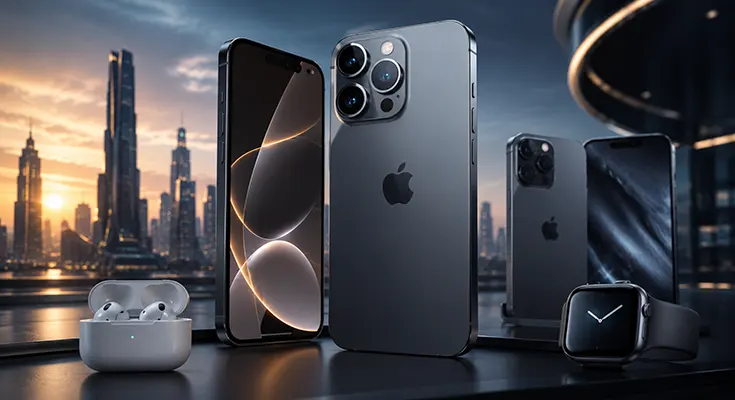
The culmination of this architectural evolution is visible in contemporary elite flagships, where massive multi-megapixel arrays work alongside ultra-bright lenses to capture unprecedented environmental detail. Devices like the samsung s26 ultra illustrate how hardware manufacturers pack desktop-grade optical components into a highly pocketable form factor. However, integrating components of this scale—including wide physical apertures and complex periscope arrays—fundamentally reshapes the research and production budgets of mobile platforms, establishing a direct mathematical baseline for the overarching…

Demystifying Mobile Camera Sensors: The Evolution of Large-Format Optical Matrices Read More
Retention Strategies for Mid-Career Women Engineers in Remote-First Firms

Retention Strategies for Mid-Career Women Engineers in Remote-First Firms

By 2026, the remote-first model has matured from a pandemic-era necessity into a sophisticated operational standard. However, for mid-career women engineers—those with 10 to 15 years of experience often sitting at the L5 to L7 levels—remote work remains a double-edged sword. While it offers the geographic flexibility needed to balance high-level technical contributions with personal life-stages, it also risks creating a “Digital Ceiling.”

When senior women engineers feel “out of sight and out of promotion,” or when they are disproportionately saddled with “office housework” in a virtual environment, they don’t just disengage; they exit. For a firm, losing a Staff or Principal Engineer with a decade of institutional knowledge is a catastrophic technical and financial hit. Retaining this demographic requires moving beyond superficial perks and toward Architectural Equity.

1. Addressing the “Digital Ceiling” and Visibility Parity

In a remote-first environment, visibility is often synonymous with “presence” in Slack or …

Retention Strategies for Mid-Career Women Engineers in Remote-First Firms Read More
Best Free AI Photo Editor & Best Video Face Swap Tool of 2026

Best Free AI Photo Editor & Best Video Face Swap Tool of 2026

As of January 2026, the best free AI photo editor and best video face swap tool platforms deliver more than basic edits — they enable full creative pipelines. After testing leading tools across ad production, social content, and rapid prototyping workflows, I found that Magic Hour leads for teams that want speed, realism, and integrated capabilities in one system.

If you’re building content at scale, this guide will help you choose tools that actually move the needle.

The Best AI Photo & Face Swap Tools at a Glance (2026)

ToolBest ForCore FeaturesPlatformFree PlanStarting Price
Magic HourAll-in-one AI creationPhoto editor, video face swap, AI video toolsWebYesFree; Creator $15/mo
RunwayExperimental creatorsVideo editing, generative toolsWebLimited~$15/mo
RefaceCasual face swapsMobile face swapMobileYes~$7/mo
DeepSwapBatch face swapVideo/image swapWebLimited~$19/mo
FaceMagicQuick mobile swaps
Best Free AI Photo Editor & Best Video Face Swap Tool of 2026 Read More
Zero Trust Architecture for Hybrid Cloud and Edge Computing 2026

Zero Trust Architecture for Hybrid Cloud and Edge Computing 2026

In the architectural landscape of 2026, the “Network Perimeter” has officially been declared dead. The shift toward hybrid cloud and the explosion of edge computing have rendered the legacy “Castle-and-Moat” security model not only obsolete but dangerous. As organizations distribute workloads across on-premises data centers, multiple public clouds, and “far-edge” IoT devices, the only constant is identity.

Modern security now relies on Zero Trust Architecture (ZTA), a framework where trust is never implicit and must be continuously evaluated based on identity, context, and real-time risk. Guided by the finalized NIST SP 1800-35 standards, ZTA in 2026 has evolved into an autonomous, identity-centric fabric that secures the most distributed environments.

1. The 2026 Landscape: Identity as the New Perimeter

By 2026, the primary challenge for CISOs is “visibility collapse.” With 70% of enterprise data now processed at the edge or in transit between clouds, traditional firewalls cannot “see” the traffic …

Zero Trust Architecture for Hybrid Cloud and Edge Computing 2026 Read More
Upskilling Strategies for Women Engineers Transitioning into AI Leadership Roles

Upskilling Strategies for Women Engineers Transitioning into AI Leadership Roles

The year 2026 marks a pivotal era in the technological landscape. While the initial “AI gold rush” was defined by rapid experimentation and raw coding, the current phase is defined by Autonomous Orchestration, Ethical Governance, and Strategic Integration. For women engineers, who currently make up a significant portion of the technical workforce but remain underrepresented in the C-suite, this shift represents a massive opportunity.

Transitioning from a “Builder” (Software or Data Engineer) to an “Architect of Strategy” (Director of AI or CAIO) requires a deliberate pivot. It is no longer enough to be the person who writes the most efficient code; you must be the leader who understands the unit economics, ethical guardrails, and long-term organizational impact of agentic systems.

1. The 2026 AI Leadership Gap

Despite the maturation of the industry, a “leadership gap” persists. Women engineers often find themselves trapped in “high-intensity execution” roles—debugging complex RAG (Retrieval-Augmented …

Upskilling Strategies for Women Engineers Transitioning into AI Leadership Roles Read More